



The automotive industry currently undergoes rapid transformation through three main factors such as safety regulation changes, the growing adoption of electric vehicles and the development of intelligent transportation systems. During this change, the market has assumed an important role in helping the vehicles achieve better safety and savings in fuel consumption. The systems always monitor tyre pressure and send warnings to drivers if their tyre pressure is not within a safe operating range. The market for connected vehicle technologies is growing as the awareness of road safety increases. The market for tyre pressure monitoring systems is also growing as car manufacturers now include the systems as standard equipment.
Understanding Tyre Pressure Monitoring Systems
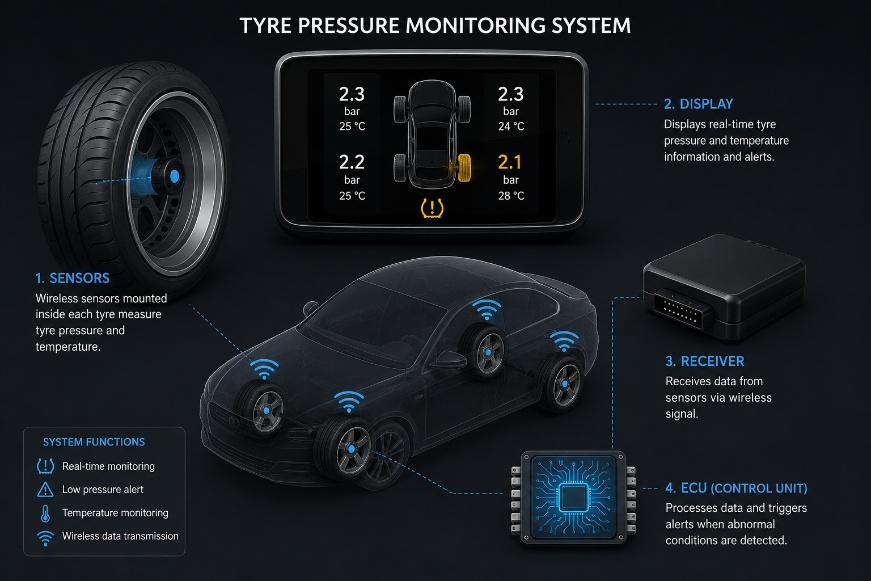
A tyre pressure monitoring system (TPMS) is an electronic device to measure the air pressure inside the car tyre, and report to the driver when the pressure drops or exceeds its pre-set limits. The market for tyre pressure monitoring systems covers the direct type that employs three or four sensors inside each tyre and the indirect type measuring wheel speed from ABS systems. The three dangers that this technology eliminates are tyre bursting, irregular tyre wear, and wastage of fuel. With the trend to impose new safety regulations on the road, TPMS has to become a standard vehicle safety feature in all passenger cars and commercial vehicle fleets, as well as an electric mobility system in the automotive market in the world.
Read: Everything You Require To Know Around Car Rental Services
Emerging Trends in the TPMS Market
- Integration with Connected Vehicles: The market is experiencing significant growth through its connection to vehicle networks. The modern TPMS solutions work by sending their data to both infotainment systems and mobile applications that allow users to track the information at any time. A system creates a link so that drivers can understand their environment and, at the same time, uses predictive maintenance to investigate the effect of time on tyre performance.
- Rising Demand from Electric Vehicles: The market of tyre pressure monitoring systems witnesses high growth with electric vehicles demanding greater accurate measurement of tyre pressure. Electric vehicles need their tyres to function at optimal levels, as this requirement affects both their battery range and operational efficiency, as it makes TPMS essential for maintaining safety and performance within this automotive category.
- Advancement in Sensor Technology: The research demonstrates that TPMS systems achieve better performance through sensor miniaturization and battery efficiency improvements. The advanced sensors offer improved precision together with extended operational duration that results in decreased upkeep needs. The tyre pressure monitoring system market now sees increased adoption as this development benefits both OEMs and the aftermarket sectors.
- Shift Toward Predictive Maintenance: The automotive industry currently applies TPMS data for predictive maintenance purposes according to its manufacturers. The systems detect imminent tyre defects through pressure trend analysis that allows them to forecast future failures. The new approach enhances commercial transportation fleets by decreasing operational risks while increasing vehicle availability.
Regulatory Influence and Vehicle Safety Standards
The tyre pressure monitoring system market receives its main development direction from existing government regulations. The introduction of TPMS as a mandatory requirement in passenger vehicles across multiple regions serves to enhance road safety while decreasing accident risks that result from underinflated tyres. The implementation of regulatory frameworks drives automakers to implement standardized safety systems, resulting in increased adoption rates across their brand-new vehicles. The existing policies create a pathway for organizations to develop new systems that enhance their operational effectiveness through better accuracy and system dependability. Manufacturers now dedicate their resources to developing better system durability features that decrease the frequency of false alerts, as safety compliance requirements have become more demanding. The ongoing regulatory initiatives provide continuous support to the tyre pressure monitoring system market that maintains its upward growth path across international markets.
Impact of Electrification and Smart Mobility
Electric and self-driving vehicles increase the need for tyre pressure monitoring systems, as it drives the market for these systems. Electric vehicles need their tyres to be in perfect condition as this condition directly affects their energy efficiency and driving range, as it makes tyre pressure monitoring systems necessary to operate. Autonomous driving systems need precise sensor data for safe navigation, creating a demand for reliable tyre monitoring systems. The smart mobility ecosystems enable vehicles to communicate with cloud platforms in real time, as it helps organizations make better maintenance decisions based on data. The development of modern TPMS technology enables it to function as a main element of smart transportation systems used in current automotive vehicles.
Integration with Vehicle Safety Ecosystems
The tyre pressure monitoring system market is increasingly integrating with broader vehicle safety and driver assistance systems to enhance overall road safety performance. The current TPMS solutions operate together with advanced driver-assistance systems (ADAS) by providing tyre pressure information that supports braking efficiency, traction control and stability management functions. The system unifies various safety components to create an intelligent vehicle response system that helps drivers adapt to different roadway situations. The TPMS system has evolved from its original function as a standalone monitoring system into a full vehicle safety system. The combination of these two systems enables vehicles to better prevent accidents while intelligent automotive systems gain importance in contemporary transportation systems.
Challenges in the Tyre Pressure Monitoring System Market
The tyre pressure monitoring system market experiences multiple obstacles despite its high usage rates. One major issue is sensor battery replacement in direct TPMS systems that increases maintenance requirements over time. The accuracy of indirect systems decreases as of calibration problems that occur during specific driving situations. The high costs that budget vehicle segments experience create barriers for developing markets to adopt their products. Different vehicle platforms use different TPMS standards, as it creates an obstacle for system interoperability. The existing limitations require ongoing sensor design development, together with data accuracy improvement and cost reduction efforts to achieve widespread use of the technology across various vehicle types and all geographic areas.
Future Outlook of the Tyre Pressure Monitoring System Market
The tyre pressure monitoring system market will develop as its upcoming artificial intelligence and IoT platforms and cloud-based automotive analytics systems. The TPMS system will develop into a predictive system that can monitor tyre conditions and suggest preventive measures through real-time analysis. The growing demand for shared mobility and fleet management services will drive the need for advanced monitoring systems. According to Pristine Market Insights, the market will develop into complete safety systems that use TPMS data to enhance overall vehicle intelligence. The automotive industry will achieve improved accuracy, reliability and operational efficiency through continuous innovation across all its platforms.
Evolving from Safety Compliance of Smart Mobility Transportation
The tyre pressure monitoring system market has changed from being a safety requirement that requires regulation to becoming an essential element for smart mobility ecosystems. The industry experiences ongoing technological development as electric vehicles connected cars and commercial fleets are increasingly adopting the technology. The industry standards undergo transformation through the implementation of predictive maintenance, the development of new sensors and the establishment of instantaneous connectivity systems. The development of smart automotive systems that use data will establish TPMS as a crucial technology that enhances safety, operational efficiency and system performance in worldwide transportation systems that will sustain its market presence for many years.